)
)
Stephen Wools: ‘Visiting SIE expo might not just spark inspiration; it could highlight a pathway to revitalising your own business model’
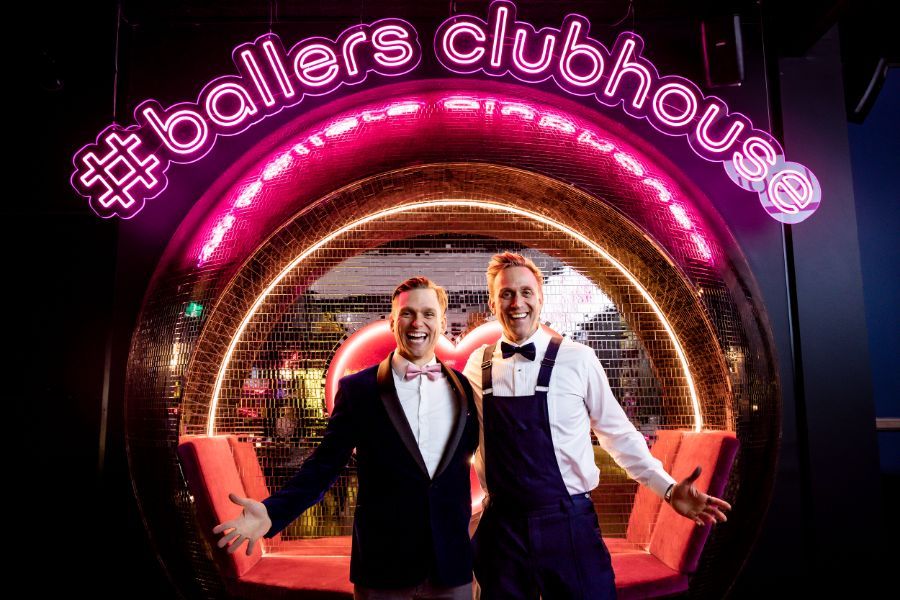
Described as a fearless Australian entrepreneur and hospitality visionary Steve Wools is a competitive socialising guru. The co-founder of Ballers Clubhouse—a game-changing fusion of sport, nightlife, and high-end hospitality—Steve will be delivering a key note at SIE Expo – part of January’s EAG. Ahead of his address he explains why operators should visit SIE Expo to see where the market is heading, and how consumers are gravitating toward experiences that combine play, atmosphere, and hospitality.
You are one of the keynotes speaking at January’s SIE Expo – without giving too much away what you will be covering?
At SIE I’ll be focusing on how competitive socialising has evolved from a trend into an anchor category in hospitality, and why markets like Australia are proving perfect testbeds for bold innovation. My key message is simple: we’re no longer in the business of F&B, we’re in the business of connection, gameplay and innovation beyond a drink.
I’ll be diving into what that means for the guest experience, why design and technology now have equal weight to food and beverage, and how operators can future-proof their venues by thinking like both entertainment brands and hospitality brands simultaneously. The talk is meant to be actionable, not abstract - what’s working, what’s not, and what’s coming next and also where Ballers Clubhouse is going as my primary example of a brand in market.
How does the UK stand in terms of its adoption of competitive socialising – is it ahead or behind Australia, the US or Continental Europe?
The UK is still the reference market globally. It’s where a lot of the category-defining brands emerged and where the model matured fastest. That said, Australia has leapfrogged in certain areas, particularly in venue scale, hybridisation of experiences, and integration of premium hospitality.
The US has the capital and real estate to scale rapidly, but the UK remains ahead when it comes to concept sophistication and depth of consumer understanding. Continental Europe is growing, but adoption is uneven and culturally fragmented.
So, in short: UK leads in maturity, Australia leads in experimentation, the US leads in scale and will fast catch up to the UK. Traditional F&B in Australia is now looking to the competitive socialising space more and more and we’ve got evidence of that through our tech company – Good Times Tech – who provide tech-infused products to the market globally.
In your opinion what brands are the best exponents of competitive socialising and why?
The obvious ones—Flight Club, Roxy Leisure, Lane7, Swingers, Hijingo, Puttshack - are clear leaders because they’ve each taken a simple, familiar game and reinvented it with brand, tech, and atmosphere at the centre. They’re masters at taking an activity people already love and elevating it to something aspirational.
Closer to home, I believe Ballers Clubhouse has pushed the boundaries of scale and multi-activity immersion. We’ve shown that you can build a venue that feels like a playground for adults while still delivering high-quality hospitality and operational discipline.
What the best brands share is a commitment to experience design: thoughtful flow, strong visual identity, clever tech that enhances rather than replaces human interaction, and premium F&B that stands on its own.
How do you define competitive socialising – is it a tech version of activities that we’ve been participating in for hundreds of years?
At its core, competitive socialising is structured fun with a social backbone. Yes, many of the activities have been around for centuries - darts, mini golf, bowling - but the modern interpretation is less about the game and more about designing a shared moment. At Ballers Clubhouse we’ve opted for creating an evolving multi-game/entertainment environment in a modern insta-worthy setting – we won’t sit still with our concept – we’re constantly looking for bolt on options to create the ultimate adult wonderland that helps our customers connect.
Technology plays a role, but the point isn’t to digitise the activity - it’s to remove friction, enhance group interaction, and create repeatable, elevated experiences. Competitive socialising is really hospitality’s answer to the experience economy: highly social, highly photogenic, and emotionally sticky.
Are flagship brands such as Flight Club and Swingers 21st-century, Insta-friendly FECs with enhanced F&B offerings?
They certainly look Insta-friendly, but describing them as FECs undersells what they do. Traditional FECs often prioritised machines and attractions; these brands prioritise storytelling, ambience, and curated social interaction.
If anything, they’re hospitality-driven entertainment brands - with the standards of a boutique hotel, the energy of a bar, and the playfulness of a leisure venue. Their F&B isn’t an add-on; it’s fundamental to the business model and the experience.
So yes, they’re Instagrammable - but what keeps people coming back is that the venues feel premium, cohesive, and memorable.
Dave & Buster’s was traditionally considered FEC but even they’re elevating their brand at the moment and evolving their offerings to attract young adults, corporate teams and more.
Do you think that traditional FEC operators are aware of the opportunities presented by competitive socialising and is it the best way of engaging with Gen Z?
Awareness is growing, but adoption varies. Many legacy FEC operators underestimate how experience-driven and brand-driven the modern consumer has become. Gen Z in particular is motivated by shareability, novelty, and social bonding. Competitive socialising delivers all three.
For operators targeting Gen Z, CS is not just a good strategy - it’s almost essential and fast becoming the new norm in hospitality, at least that’s what we’re now seeing as the shift in Australia and across the UK. But it requires rethinking everything from venue design to music programming to food philosophy. Simply adding a new activity isn’t enough; the entire experience must feel intentional and elevated. It must be a strategic investment in a venue brand.
Is there a big churn of competitive socialising brands based on the imperative of always being relevant and the production line of ‘new kids on the block’?
There’s definitely churn, and that’s natural in any fast-growing category. The barrier to launching a CS concept is lower than the barrier to scaling it sustainably. Many newcomers underestimate the importance of operational excellence, consistency, and narrative clarity. It’s also a long haul to build a brand and cement it into a market so the long-term lens is important as opposed to hopefully gaining a quick buck from a space with games.
What we’re seeing now is a move from the “launch something quirky and hope it takes off” phase to a more professionalised, hospitality-first era. The brands that survive will be the ones that treat this as a long-term entertainment and hospitality business -not just a clever game with a bar attached. CS will become the new norm for that next generation of customer base.
Finally, how important is it to have an expo dedicated to competitive socialising and what message would you send to more traditional operators contemplating a visit?
It’s hugely important because the sector is no longer a niche - it’s a significant part of modern hospitality. Having an expo purely dedicated to competitive socialising validates the category and accelerates best-practice sharing.
To traditional operators, I’d say: this is your chance to see where the market is heading, not just where it is today. Your future customers - especially Millennials and Gen Z - are gravitating toward experiences that combine play, atmosphere, and hospitality. Visiting the expo might not just spark inspiration; it might highlight a pathway to revitalising your own business model.